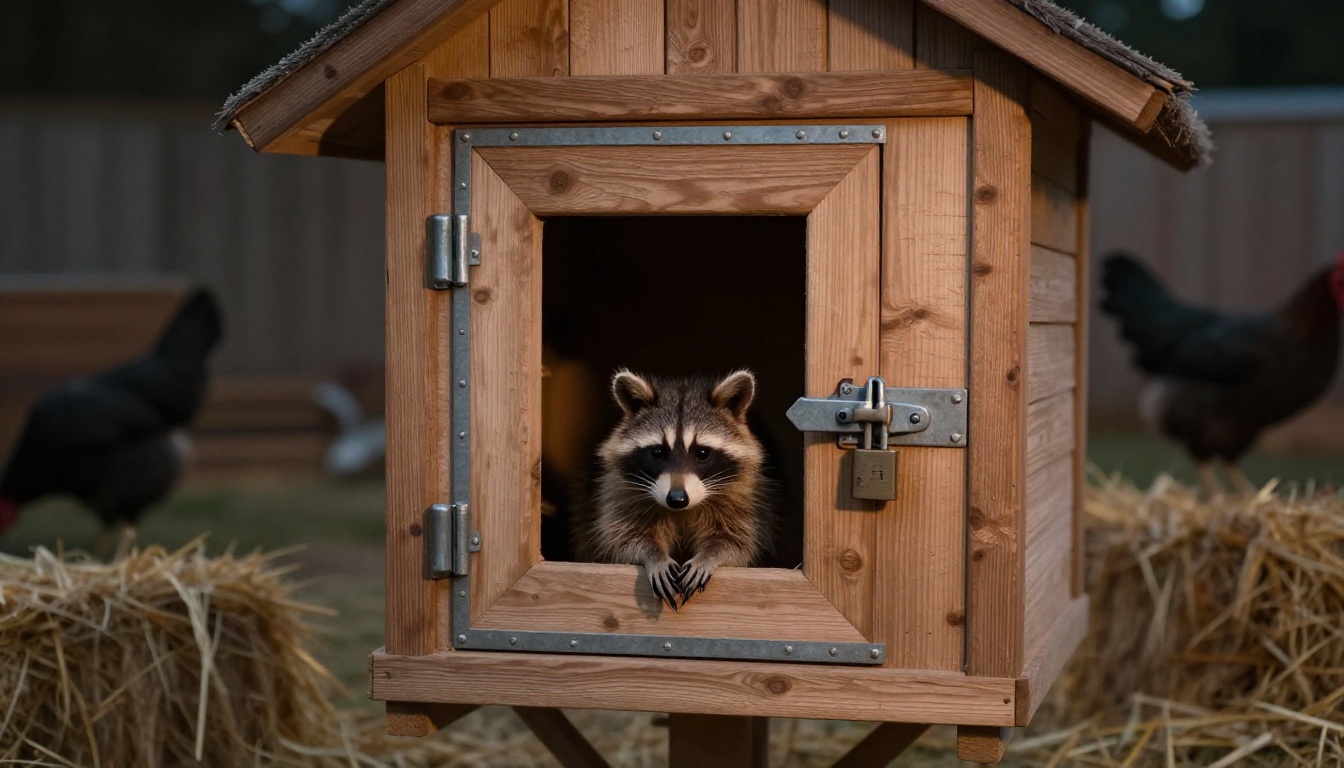
You wake up one morning to a nightmare. Your chicken coop door hangs open. Feathers scatter everywhere, and half your flock is gone. Raccoons struck again overnight. These bandits cause over $100 million in U.S. poultry losses each year, according to farm reports.
Standard latches fail because raccoons have nimble paws like tiny hands. They twist, pull, and pry with patience. Foxes, opossums, and weasels join the fray too. You’ll learn simple upgrades here, from DIY tweaks to pro latches and extra barriers. These steps keep your birds safe without breaking the bank.
Why Raccoons Outsmart Basic Coop Latches Every Time
Raccoons treat your coop like a puzzle. Their front paws grip and rotate better than most animals. They test latches for minutes, sometimes hours, under cover of dark. Because of this, weak designs give way fast.
First, spot the signs of trouble. Scattered feathers near the door mean manipulation. Paw prints with five toes show raccoons at work. Feathers inside with no mess point to climbers like opossums. Understand these clues. Then pick fixes that match the threat.
Common latches crumble under pressure. Thumb latches slide open with a nudge. Spring clips pop loose after a few tugs. Eye hooks lift right off if loose. Raccoons win because they never rush. They probe until something yields.
In addition, weather wears these down. Rust weakens metal over time. Wood swells and gaps form. Check your setup now. Tighten screws and replace anything bent.
Raccoon Tricks That Fool Simple Hooks and Knobs
Raccoons unlatch swing gates first. They hook a claw under the bar and lift. Cabinet-style doors fall next. A paw twists the knob like you would. For example, basic snaps release with steady pressure.
They even team up sometimes. One distracts while another works the latch. Their smarts rival a smart dog’s. Studies show they solve problems faster than cats.
Test this yourself. Grab a flashlight at dusk. Watch from afar as they approach. You’ll see the patient paw work. Then reinforce before they succeed.
Foxes, Opossums, and Weasels: Other Latch Breakers to Watch
Foxes chew latches if they can’t twist. They dig under doors too, creating gaps. Opossums squeeze through small openings near the latch. They pry with sharp teeth when needed.
Weasels slip tiny cracks. They kill for sport, not food. Signs help identify them. Fox digs show piled dirt outside. Opossum prints have opposable thumbs like raccoons.
Each needs strong latches. However, foxes demand digging fixes. Weasels require tight seals. Match defenses to the tracks you find.
Easy DIY Fixes to Make Your Current Latches Predator-Proof
Upgrade what you have first. Hardware stores stock cheap parts. Most jobs take under 30 minutes. Grab galvanized steel items. They resist rust in rain.
Test every fix hard. Try to open it yourself. If you succeed, add more. These hold against paws and teeth.
Start small. Then layer on. Your chickens thank you with fresh eggs.
Lock It Down with Padlocks and Carabiner Clips
Padlocks stop twists cold. Drill two holes through your door and frame. Thread a shackle through. Snap shut with a brass lock. These weather well and cost under $10.
Carabiners work great on chains. Loop chain over slide doors. Clip tight. Pros include low cost and quick setup. Cons mean you need a key each time.
For pop doors, chain from top to bottom. Raccoons can’t unclip solo. Install in 15 minutes with a drill. Tighten often as wood shifts.
Slide Bolts and Barn Door Locks for Foolproof Security
Slide bolts mount horizontal. Place one high and one low. Raccoons reach neither alone. Use long screws, not nails. They hold firm.
Add wood blocks behind the bolt. This stops full slides. Barn door styles overlap for extra strength. Cost about $15 per set. They last seasons.
Mount on sturdy frames. Check alignment first. Slide smooth after install. Predators give up fast.
Bungee Cords and Chain Wraps as Quick Backups
Wrap heavy chains around handles. Padlock the ends. Raccoons chew thin ones, so pick thick links. Bungees add tension over hooks.
Use these for temp fixes. Stretch bungee tight across the door. Combine with bolts for best results. They cost pennies.
Inspect weekly. Replace chewed parts. These buy time until pro upgrades.
Best Raccoon-Proof Latches You Can Buy and Install Today
Ready-made latches outperform DIY sometimes. Look for 2026 models in galvanized steel. Prices run $20 to $50. They install with basic tools.
Compare to hacks. Buy if your coop sees heavy raids. Steps stay simple. Screw in place and test.
User reviews praise zero break-ins after swaps. Pick based on door type.
Pinch-and-Lift Latches That Stop Paws Cold
Pinch latches need two paws. Raccoons manage one action at a time. Galvanized versions shine outdoors. Screw into wood or metal frames.
Install takes 10 minutes. Align the pinch bar even. Lift requires thumb pressure they lack. Folks report peace after years.
Heavy-duty ones handle wind too. Clean rust yearly for longevity.
Heavy Duty Figure-8 and Galvanized Slide Latches
Figure-8 designs hook tight. Raccoons can’t unloop without thumbs. Mount upside down for extra challenge. Slides demand a full pull.
Use on large coops. Frame strength matters most. Galvanized slides resist chewers. Install high for foxes too.
These beat basic bolts. Swap now if raids persist.
Layer Up with Full Coop Defenses Beyond Just Latches
Latches guard the door. Predators probe everywhere. Walls, floors, and roofs need attention. Combine for total protection.
Low-cost adds pay off big. Start with weak spots. Inspect at dawn for clues.
Reinforce Walls, Roofs, and Floors Against Diggers and Climbers
Bury hardware cloth 12 inches deep. Skip chicken wire; they tear it. Add apron skirts outward. Foxes quit digging.
Clip roofs tight. Raccoons lift loose panels. Floor wire stops burrows from below.
Seal gaps near latches. Use 1/4-inch mesh. Check quarterly as soil shifts.
Motion Lights, Radios, and Fencing for Nighttime Deterrence
Solar motion lights beam bright. Predators flee the sudden glow. Place near doors.
Tune a radio to talk stations. Voices mimic people all night. Electric netting zaps outsiders. Chickens stay safe inside.
Combine these. Lights spot, sounds scare, fence blocks.
Strong latches form the base. Layer on DIY tweaks, pro buys, and barriers for wins. Inspect your coop tonight. Pick one fix, like a padlock, and start.
One homesteader added slide bolts and cloth. No losses in two years. Your turn keeps birds clucking happy.
Share your predator stories below. What fix worked best? Safe coops mean thriving farms.