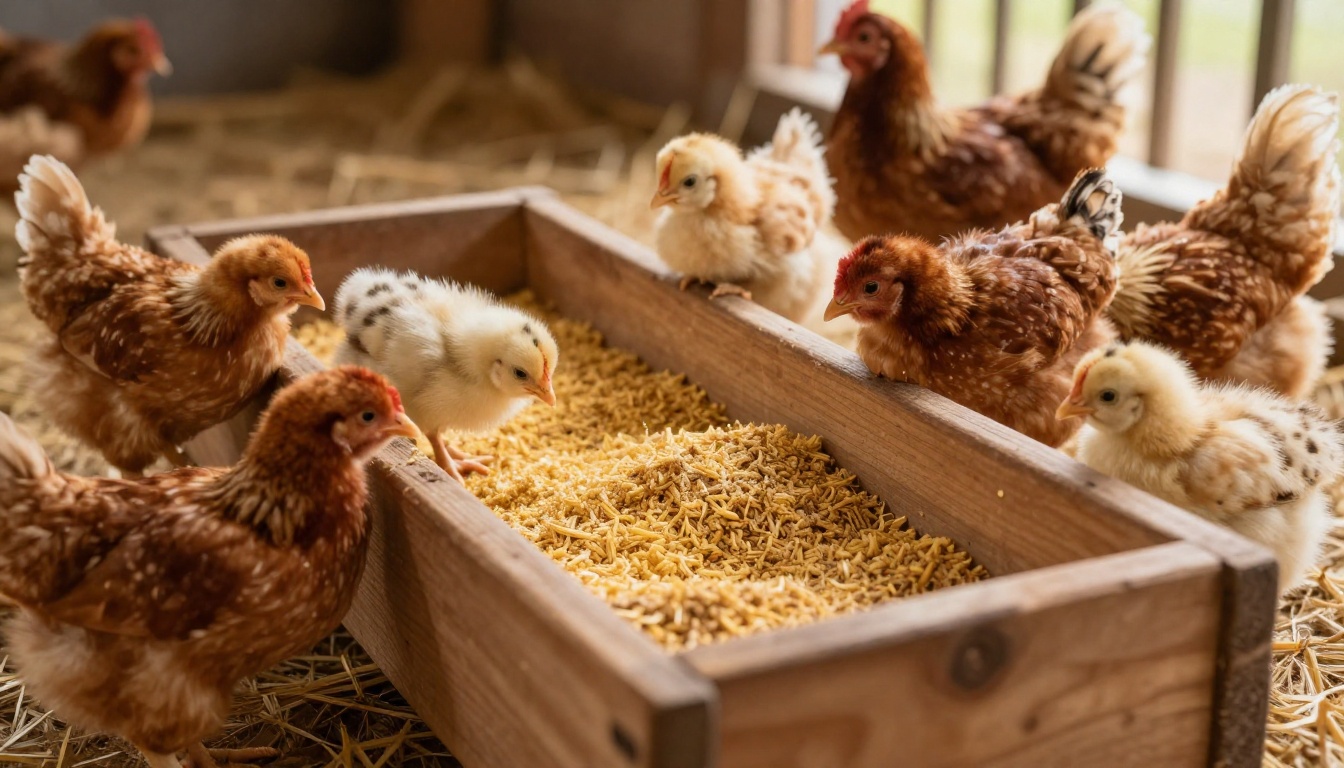
Picture this: You raise a batch of heritage chicks full of promise. They peck at their high-protein starter feed like it’s going out of style. Then you switch too fast to grower feed. Suddenly, picky eaters ignore the bowl, and some chicks sulk with tummy troubles.
Heritage chicks come from old breed lines. They grow slower than commercial hybrids. That’s why they need a careful shift from starter feed (20-24% protein) to grower feed (16-18% protein). This supports steady muscle and bone growth. It avoids overload on their kidneys.
Rush the change, and you risk gout or weak frames. Do it right, though. Your birds get better digestion and fewer health hiccups. They turn into strong adults ready for egg production. This post covers timing cues, a step-by-step plan, smart feed choices, and fixes for snags. Follow these simple steps. Your chicks thrive with happy clucks.
Spot the Right Time to Switch Your Heritage Chicks’ Feed
Heritage chicks hit the switch point around 6-8 weeks. They show clear signs they’re ready. Full feathering covers their bodies. They double their starter weight. Active foraging takes over frantic eating. Interest in high-protein starter drops off.
Watch your flock close. Behavior trumps calendar dates. Risks grow if you wait too long. Excess protein strains kidneys. It leads to gout or leg issues later. Time the switch for their healthy growth phase. Then they build frames without fat buildup.
Heavy breeds like Orpingtons need 8-10 weeks. Lighter ones like Dominiques ready at 6 weeks. Free-range chicks mature faster. They snack on bugs and greens.
Here’s a quick timeline table for common breeds:
| Breed | Typical Switch Age | Key Sign |
|---|---|---|
| Rhode Island Red | 7 weeks | Full feathering, foraging |
| Plymouth Rock | 8 weeks | Doubled weight, calm eaters |
| Orpington | 8-10 weeks | Sturdy legs, less brooder time |
| Dominique | 6 weeks | Active scratching, beak strength |
This table helps you track progress. Adjust based on your setup. Observe daily. Your chicks tell you when.
Age, Size, and Behavior Clues
Check visuals first. Combs redden and grow. Wattles appear. Legs look sturdy, not spindly. No bald spots mar their feathers.
Behavior shifts too. They eat less wildly. More time scratching dirt for bugs. Size-wise, small breeds fit in your palm. Larger ones span a hand and a half.
Personalize it. Snap weekly photos. Compare growth. These clues beat strict rules every time.
Adjusting for Your Heritage Breed
Breed matters a lot. Rhode Island Reds switch at 7 weeks. They forage early. Plymouth Rocks take 8 weeks. Their bulk slows things.
Brooder birds lag behind free-rangers. Less natural forage means more starter reliance. Track with a notebook. Note weights and photos. Soon you know your flock’s rhythm.
Choose a Grower Feed That Fits Heritage Chicks Perfectly
Pick grower feed at 16-18% protein. Go non-medicated. Corn-soy bases work well. They match heritage needs. Add probiotics for gut health. Oregano or fermented grains boost natural immunity.
Crumbles suit young beaks best. Pellets come later. Organic or soy-free options keep purity high. Skip layer feed early. Its calcium hurts kidneys in chicks.
New Country Organics offers solid choices. Scratch and Peck fits too. Read labels close. Look for balanced vitamins and minerals. This shift aids feathering and frame growth. No excess fat piles on.
Use this shopping checklist:
- Protein: 16-18%
- Form: Crumbles
- Add-ins: Probiotics, herbs
- No meds or calcium boosters
Smart picks prevent issues down the line.
Your Foolproof 7-10 Day Plan to Switch Feeds Gently
Switch over 7-10 days. Gradual mixes ease the change. It prevents stress or coccidiosis flares. Offer in the same feeder. Keep fresh water nearby always.
Start simple. Days 1-3 mix 75% starter with 25% grower. Chicks adjust flavors slow. Days 4-6 go 50/50. They balance tastes. Days 7-9 shift to 25% starter, 75% grower. By day 10, full grower rules.
Grind pellets if needed. Add electrolytes first few days. Scatter some feed to spark interest. Free-range chicks get bug bonuses. Slow pace keeps digestion smooth.
Prep pays off big. Health checks spot problems early.
Prep Your Chicks and Supplies Before Day One
Weigh ratios ahead. Use a kitchen scale. Clean the brooder fresh. Check waterers for clogs.
Do a quick health scan. Look for bright eyes. Feel for firm droppings. Perky chicks mean go time.
Daily Mixing Ratios and Feeding Tricks
Measure with a cup. One cup starter to one-third grower for day 1. Stir well.
Boost appeal. Top with a dab of yogurt. Watch intake. They should finish bowls clean.
Vary spots. Scatter outside. It mimics foraging.
Final Days: Lock in the New Feed Habit
Taper starter fully by day 10. Reward with veggie treats. Chicks eagerly peck grower when done.
Monitor eagerness. Full switch sticks when they dive in first thing.
Watch for Trouble and Keep Your Chicks Thriving
Trouble shows quick. Loose poops signal upset. Lethargy or weight loss follows. Feather picking starts from stress.
Slow the mix more. Add probiotics daily. Vet check if it lingers past three days.
Success looks like steady gains. Shiny feathers gleam. Droppings firm up normal.
Long-term, eye layer feed at 16-20 weeks. Myths say abrupt switches work. They don’t. Stress hits hard.
What if they refuse? Offer grit. It aids digestion.
Quick Fixes for Common Hiccups
Diarrhea hits? Up water. Cut feed portions short-term.
Picky eaters? Mix in fruit bits sparingly.
Slow growers? Check for parasites. Worm if needed.
These tweaks keep flocks on track.
Healthy transitions build hearty layers. Time the switch with age, size, and behavior cues. Mix feeds slow over 7-10 days. Choose 16-18% grower crumbles with probiotics. Watch close for issues like loose stools.
Your effort pays off. Strong birds lay fresh eggs soon. Try this plan next batch. Share your flock photos in comments. Subscribe for more heritage chicken tips.
Your chicks thank you with busy scratches and full combs.